Why use it
Use it when people can express the same need in many different ways, but your workflow needs one clear next path.
Working example
Working example: service-intent routing. Tested in the Votel workflow simulator with synthetic JSON input on September 17, 2026. The safe sandbox flow exposed two explicit classes—Booking and Team—and completed successfully without an external action.
Manual trigger → LLM Classifier → Booking or Team → End
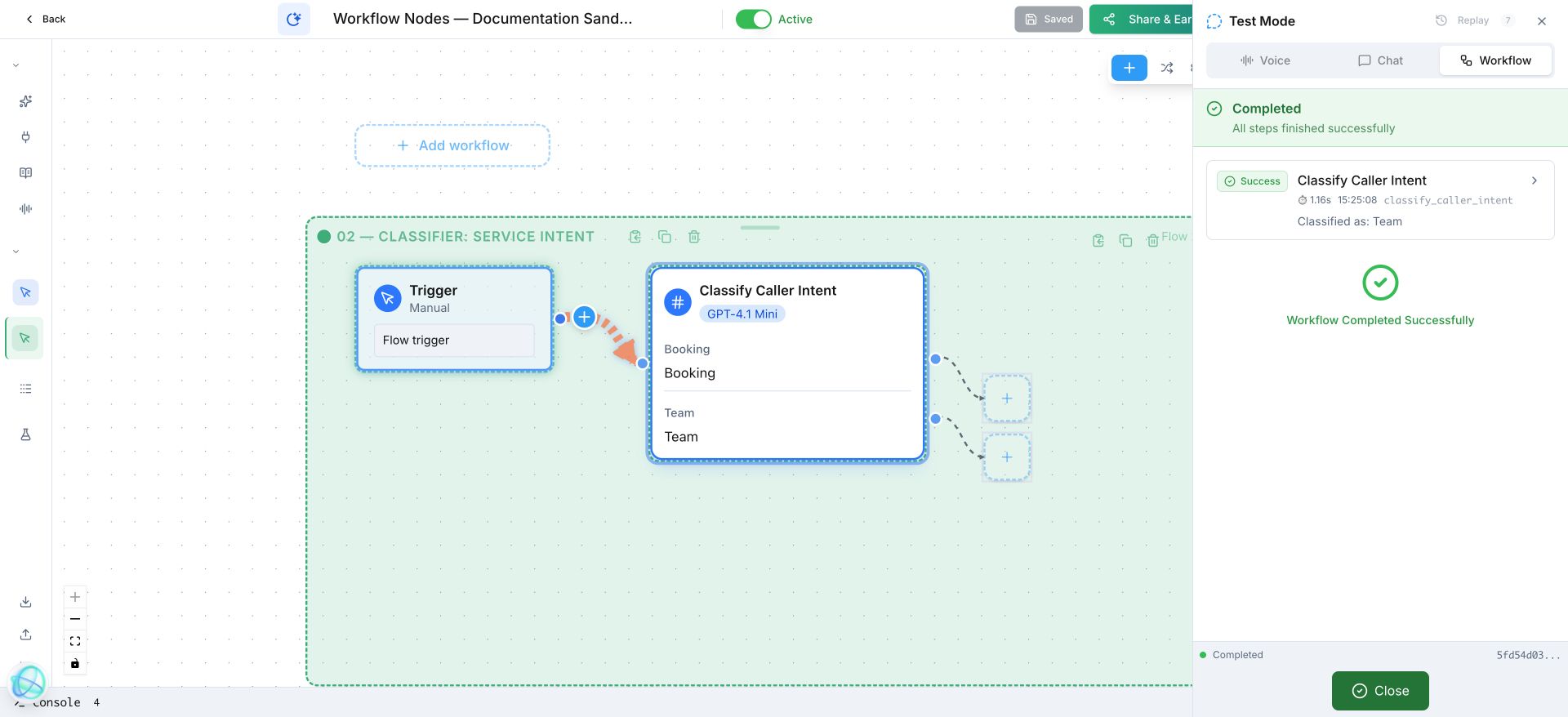
The LLM reads the caller’s wording and selects one outcome you already defined: Booking when they want to schedule a service visit, or Team when they want to speak with a person.
Picture this
A home-services agent classifies messages as new quote, existing customer, emergency, or other, then sends each to the right flow.
Set it up
- Define a small set of outcomes based on what should happen next.
- Give each outcome realistic examples and near-misses.
- Connect every outcome to a safe next action.
- Include an “other” route so unfamiliar wording does not disappear.
What comes next
After this block, use a Conversation Node, Decision, human handoff, or the next specialist workflow.
Avoid this when…
Use a Decision when the workflow can check a known contact field without AI interpretation.
Before you publish or activate: verify the current builder labels in Votel and test with dummy data. This independent guide describes the purpose and a safe setup approach; it does not replace Votel’s current product documentation or compliance advice.