I wasn’t looking to leave HighLevel. Then I tried Votel.
HighLevel helped build my career. I respected the founders, loved the community, and built companies and products around the platform. I had no reason to look elsewhere until a few ordinary tasks in Votel made me question what a modern agency platform should feel like.

What would make a six-year HighLevel insider look elsewhere?
Quick verdict: HighLevel remains a strong choice for agencies with established systems, teams, integrations, and community support. Votel is the stronger fit when you want an AI-native platform where agents, CRM, websites, workflows, communication, and follow-up operate as one connected system. The right answer depends on the value of that operating change compared with the cost and risk of migrating.
Why HighLevel earned my respect
I love the community and what the platform made possible. HighLevel’s co-founders, Shaun Clark, Varun Vairavan, and Robin Alex, are incredible people, and I have enormous respect for what they built. HighLevel pioneered the all-in-one marketing platform for agencies, created an extraordinary community around it, and opened a path to recurring revenue for thousands of entrepreneurs. I spent six years inside and around that ecosystem. Many of my peers and close friends are die-hard HighLevel users, and that makes complete sense for the businesses they have built. They should keep using the platform that supports their success.
Seven years ago, when I first stumbled across HighLevel, I did not immediately grasp what it did or the scale of the founders’ vision. It took me a few months to understand what they were trying to build. When it finally clicked, I was blown away. I remember saying, “This is going to be the next billion-dollar company,” because the problem HighLevel was solving for agencies was that significant.
The experience behind my opinion
That history is exactly why this surprised me. I spent more than six years building, working, and consulting in the HighLevel ecosystem, including work with more than 4,000 marketing agency owners. I have seen the struggles new agency owners face, as well as the extraordinary businesses experienced operators have built. I still help people in the HighLevel ecosystem and build tools around it.
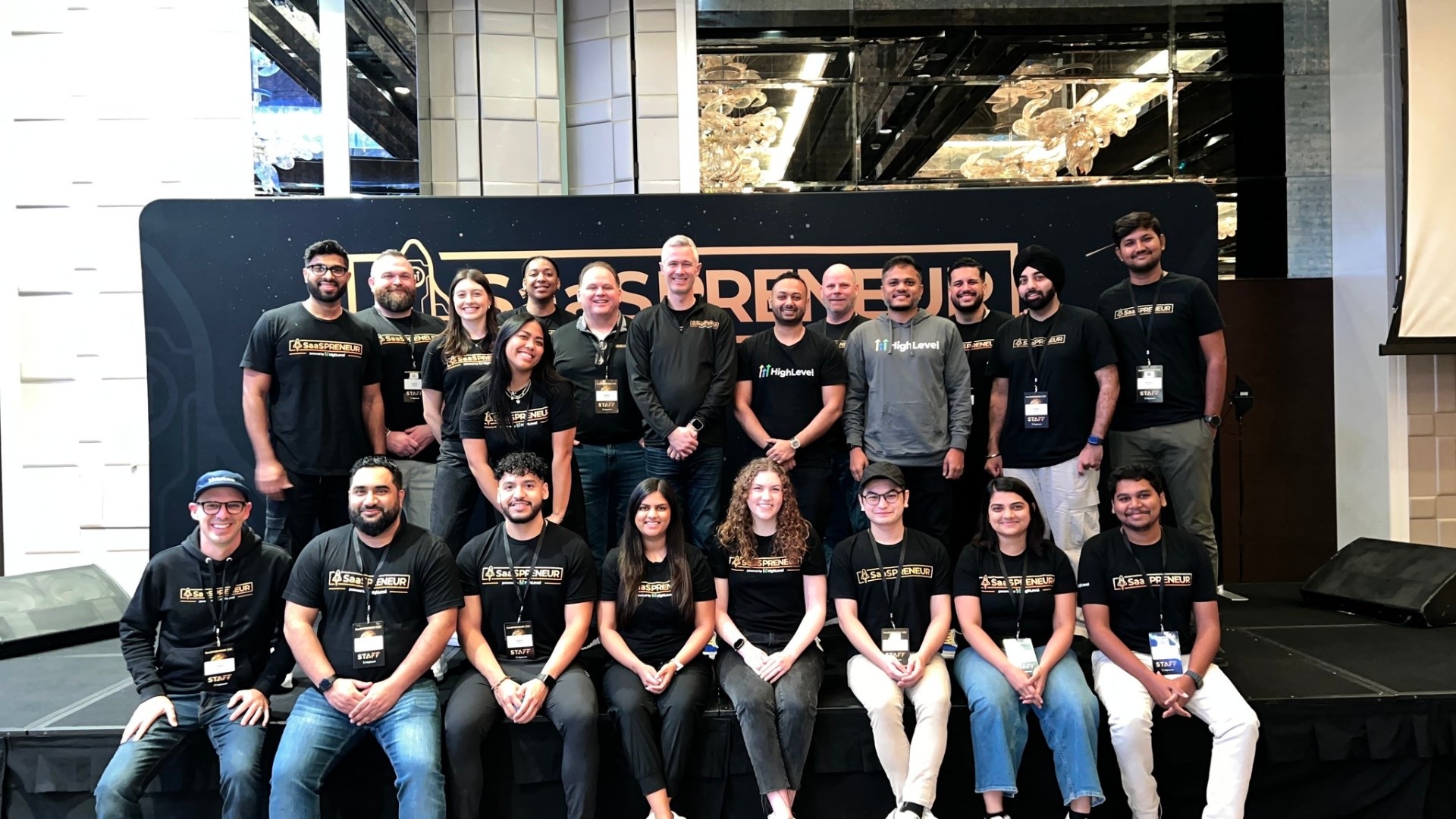
I am also a Gold SaaSpreneur Award winner. Over the years, I have worked with and advised the majority of HighLevel’s SaaSpreneur Award winners, often early in their journeys, through my time at HighLevel or Extendly. I know HighLevel from nearly every angle: from the outside as a builder and consultant, and from the inside through product development, roadmaps, teams, execution speed, and the friction involved in turning ambitious ideas into a working platform.
That experience is now the lens I bring to Votel. I test the platform as an operator, document what works, identify where it is still early, and translate its capabilities into practical guidance for agencies. All Things Votel is where I share that work so people can make an informed decision and implement the platform with fewer wrong turns.
What changed when I tried Votel
Your first reaction may be to disagree with me. Why look elsewhere when HighLevel already works for you? I understand that reaction because I had it too. When a platform supports your business and a generous community helps solve every issue, there is little reason to look outside that world. I was not shopping for a replacement.
Votel is a newer all-in-one agency platform built around AI from the beginning. My perspective changed only after I gave it a genuine try. I was not comparing a promise or a roadmap with what I already had; I was using an experience that worked immediately. The things I wanted felt considered from the beginning.
I also wanted to understand the vision behind the product, so I reached out to Mike Brown, Votel’s founder and CEO. He responded quickly and spent an hour giving me a demo, walking me through the product, and answering every question I had. He never made the conversation feel rushed. A few days later, he followed up to see whether I had more questions, and we jumped on a second call. That openness mattered to me. I came away with a much clearer understanding of what Votel is building, why it is being built this way, and the thinking behind where it is going. Those conversations are a real part of why I am bullish on Votel.
Today, I recognize a similar sense of possibility in Votel. The smoothness and usability of my first experiences made the platform feel built for this new era. I am not predicting its future as a certainty, but I am optimistic that Votel can become a powerful player in the AI CRM market.
That first experience did not prove Votel was better. It made me curious enough to keep testing.The right platform can change as your business evolves.
Before HighLevel, I came from the ClickFunnels world. I have deep respect for the marketing expertise Russell Brunson shared and the Funnel Hacker community he built. I have equally deep respect for the remarkable marketing automation platform and community that Shaun Clark, Varun Vairavan, and Robin Alex built with HighLevel. Many of us eventually moved from ClickFunnels to HighLevel because it was a better fit for the businesses we were building. That choice did not diminish what ClickFunnels taught us or the value of its community. It simply reflected what we needed at the next stage of our journey.
- ClickFunnels helped popularize funnel building and gave entrepreneurs a language for selling online.
- HighLevel brought websites, funnels, CRM, automation, messaging, and agency SaaS into one groundbreaking platform.
- Choosing Votel now does not erase either contribution. It is the same decision to choose the platform that best fits the next stage.
HighLevel pioneered the category. Votel reimagines it for 2026.
HighLevel showed an entire generation of agencies that one platform could replace dozens of tools and become the engine of a recurring-revenue business. I believed in that vision, built around it, and helped other people do the same. Without a shadow of doubt, it was groundbreaking when it arrived in 2018. There was no meaningful rival offering agencies that combination of capability, ownership, and value. Its foundation dates to that pre-AI era, before today’s expectations and before many operators expected a complex business platform to feel effortless on a phone. A mature architecture naturally carries forward workflows, interfaces, and technical choices from the eras in which it evolved. That accumulated depth is both a strength and a constraint. Votel has the advantage of starting fresh, with current expectations shaping the foundation from day one.
Something happened to me today that made this real. I needed to create a Votel sub-account for someone while I was on my phone. I opened Votel expecting the task to be awkward or simply not work well on a smaller screen. Instead, the Votel mobile experience was so smooth and felt so flawless that I was genuinely shocked. My jaw dropped at how easy and clean it was. I created the Votel account without hesitation and without needing to wait until I was back at my desk.
My low expectation surprised me. After years of using a platform whose web experience has often felt desktop-first, I had learned to normalize and forgive user-experience friction because HighLevel delivered so much capability at such a compelling price. After years of trying to perform comparable agency-admin work in HighLevel, its mobile web experience has remained deeply frustrating for me. The contrast with Votel was immediate. It reminded me that breadth, affordability, and a thoughtful user experience do not have to be competing choices. That small moment felt like a breath of fresh air.
The customization work showed me what agencies valued.
From day one, I built custom CSS and JavaScript around HighLevel to tailor the experience for agencies. That work was valuable, and HighLevel’s openness made it possible. Votel makes many of the same experience decisions available as native controls. As HighLevel grew into an enormous all-in-one platform, some newer capabilities were naturally added around an existing core rather than designed together from a blank page. That can make parts of the user journey feel different from one another.
I saw that challenge from the inside as well. During my time at HighLevel, I worked across many teams, and one of my biggest struggles was getting everyone aligned on a consistent product experience. In the structure I experienced, teams had different priorities and ways of working, so even basic actions such as creating, viewing, updating, and deleting records could behave differently across the platform. I tried to launch an initiative to document and standardize those patterns, but it did not gain traction. At the time, I struggled to find a single owner who could coordinate consistency across the entire product. That experience helped me understand how organizational structure eventually becomes visible in the software itself.
Another part of the culture, visible on the Ideas board from the early days, has been the demand for rapid feature parity. People regularly ask HighLevel to add its own version of a feature they have seen in another product. I sometimes describe this as a copy-paste culture. The request itself makes sense: users want one platform to replace more of their software stack. The risk is that the visible shape of a feature can be reproduced without its full purpose, workflow, or depth carrying over. In my experience, the result can look familiar while only partially solving the original problem. That creates a love-hate relationship with the platform. The feature exists and may work well enough to avoid paying another provider, but not always well enough to replace the specialized tool without compromise. Many HighLevel users have accepted that tradeoff in exchange for the extraordinary breadth of the platform.
- HighLevel gave technical operators the flexibility to reshape themes, calendars, login pages, and navigation.
- HighLevel’s breadth and open architecture made that technical flexibility worth accepting for many agencies.
- Votel approaches those same needs with more of the experience designed as one system from the start.
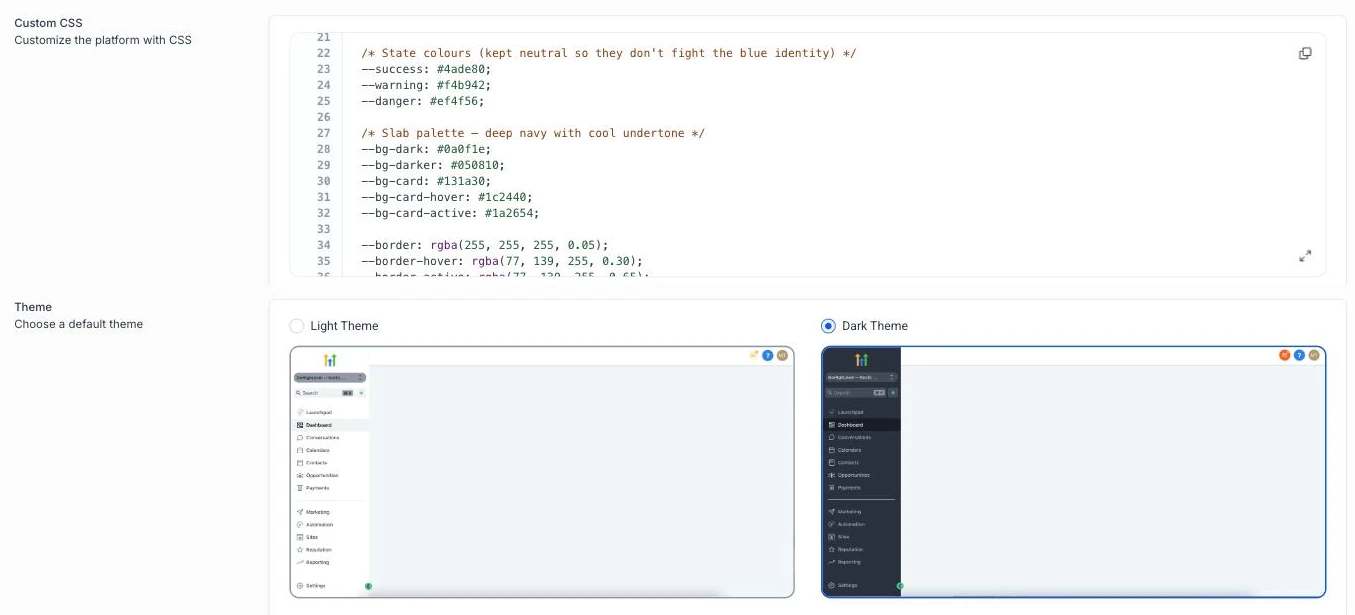 HighLevel · custom CSS
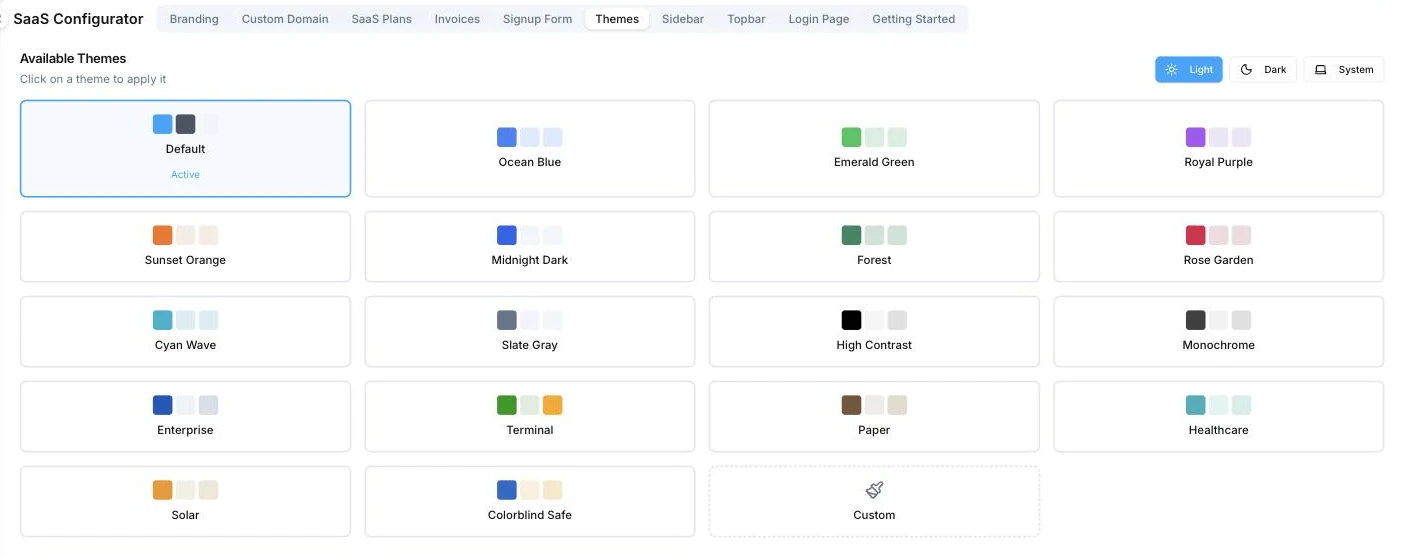 Votel · native themes
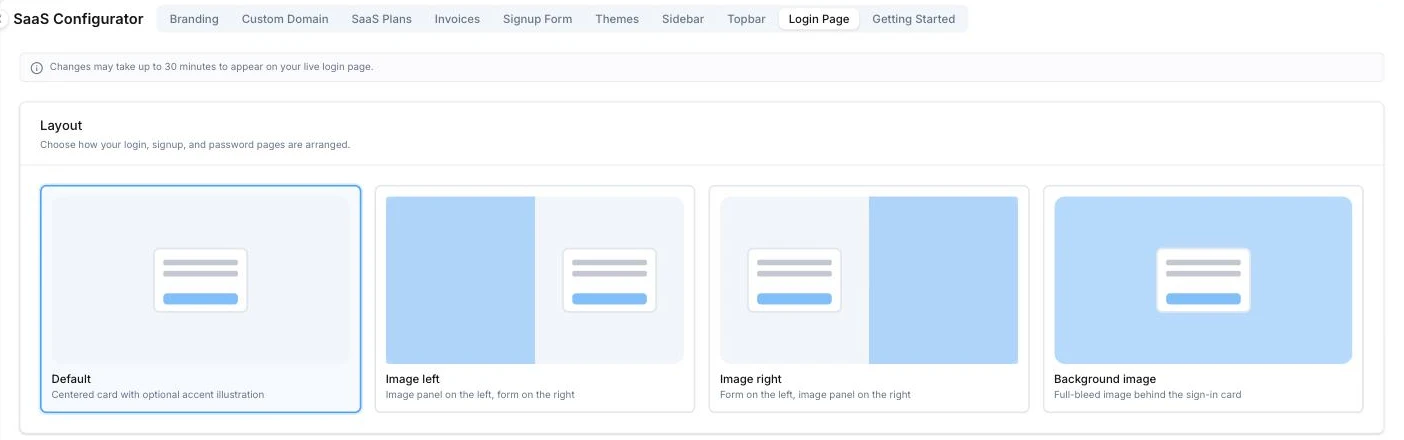 Login editor
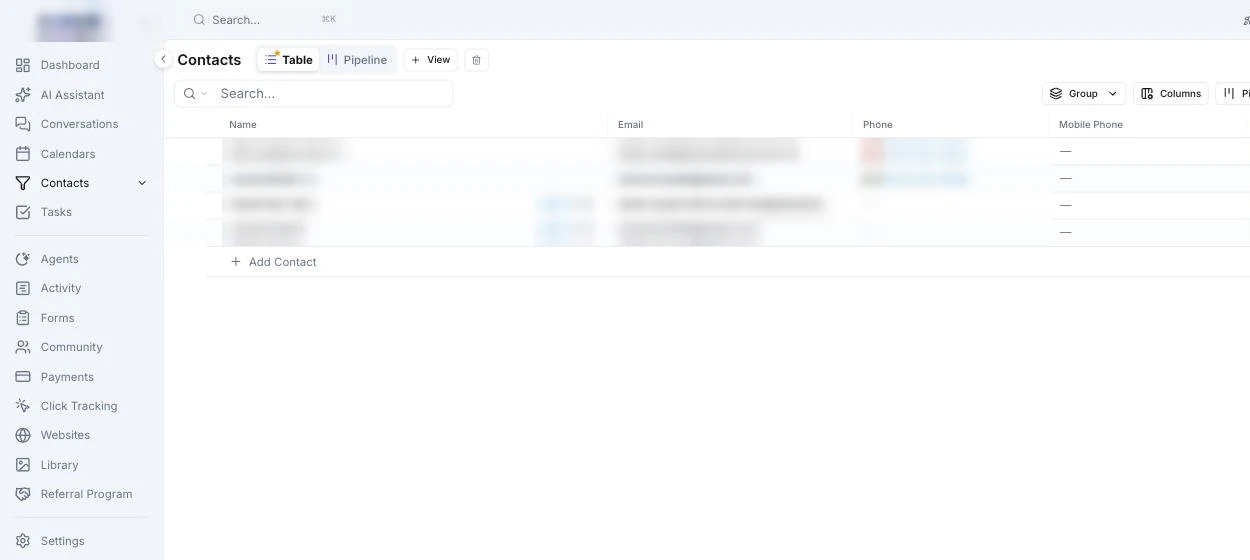 Agency workspace
Real product screensCaptured September 2026
Power and simplicity serve different starting points.
HighLevel’s exceptional breadth comes with a real learning curve. In my experience, agencies often became trainers and technology guides before they could focus on being strategic partners. Some owners enjoy that control; others simply want the technology to work out of the gate. HighLevel’s product culture has historically emphasized giving agencies more tools, flexibility, and control. That is a real strength. The tradeoff is that simplicity and client-facing user experience can sometimes feel secondary to capability.
Even today, when people ask me about HighLevel, my shorthand is: “HighLevel works until it doesn’t, and you have to be willing to accept that.” The platform moves quickly, so users may need a tolerance for occasional outages, shifting features, and workflows that change as the product evolves. It reflects the skateboard model at the heart of HighLevel’s culture: ship something useful, learn from real use, and keep rebuilding while moving forward. Many HighLevelers are comfortable with that constant motion. Is it good or bad? Neither universally. Some people love the pace and steady stream of new capabilities. Others would rather use a platform that feels more settled.
Loyal software communities can sometimes mistake criticism for hostility, and that is not unique to HighLevel. I have seen legitimate reliability or quality concerns answered with, “If you don’t like it, don’t use it.” I think both sides deserve more room. People can respect what HighLevel built, depend on it every day, and still ask it to improve. In many cases, direct criticism comes from people who are deeply invested in the product’s success.
- Support teams could spend two, three, or four hours walking a new user through setup.
- A deep education and support ecosystem grew around HighLevel because there was so much capability to learn and configure.
- Votel gets a new operator from idea to a usable starting point in a much shorter path.
HighLevel rewards people who want to become platform experts. Votel feels more natural for people who want to reach the outcome with less configuration.
I will tell you when another product is better.
Even while I worked at HighLevel, I was never going to claim our Conversation AI was automatically better than a product like CloseBot. I am practical about the tool that solves the problem best.
- I know many HighLevel affiliates personally, and I believe they mean well.
- A mature ecosystem gives buyers many experienced voices and proven implementation partners to learn from.
- Commission can shape anyone’s judgment, including mine. That is why I disclose the relationship and show my reasoning.
Not: which company do I know best?
Public promotion and private usage should line up.
That is the standard behind this page.
AI-first and AI-evolved platforms begin from different places.
HighLevel has worked hard to bring AI around a mature platform. Votel starts from a different premise: AI is part of how the system is created and operated.
- The platform can begin with a conversation about the business instead of a blank technical workspace.
- Agents, workflows, data, and actions are meant to work as one system.
- For a new agency, that changes the learning curve and the delivery model.

Conceptual illustrationAI-evolved architecture vs AI-first foundation
Votel’s booking experience feels native to this era.
This is one of the clearest examples of Votel’s approach: powerful controls, clean presentation, and live visual feedback without reaching for code.
- Thirty-three visual themes and four page layouts were available when we reviewed it.
- Colors, logos, covers, layouts, and booking types are configured visually.
- The finished booking page looks like part of the client’s brand.
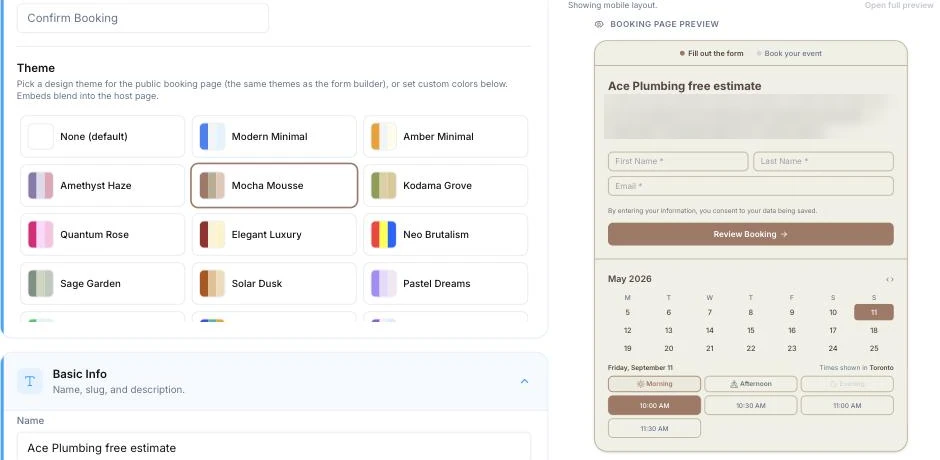
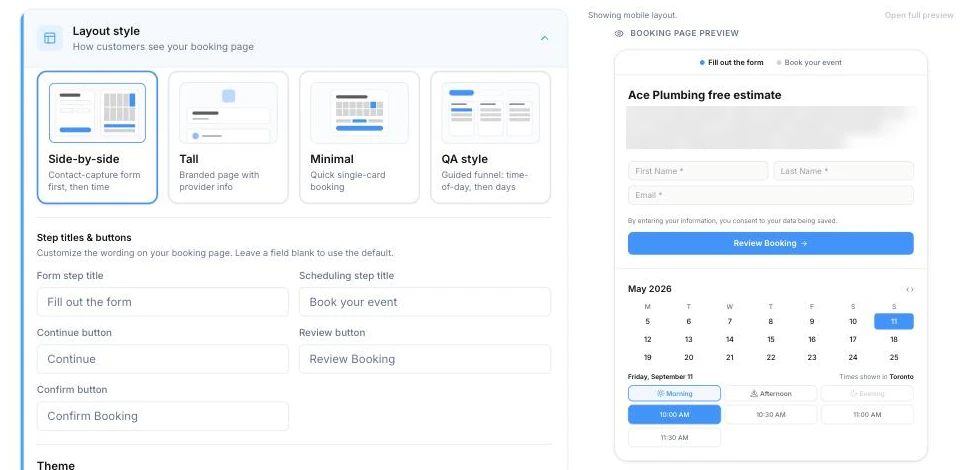
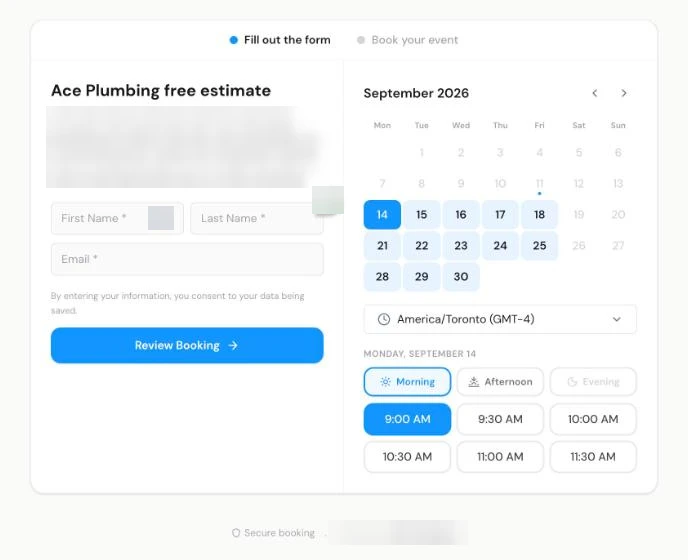
Theme picker, layouts, and live bookingCaptured September 2026
The AI can do more than talk.
MCP tools turn an assistant into an operator. In the same observation session, our research counted 319 visible Votel tools and 36 in HighLevel.
- Actions reached across CRM, messaging, payments, workflows, forms, files, reputation, and more.
- The count is a dated observation, not a permanent promise.
- Tool counts alone do not prove quality. What interests me is the range of work an agent can complete without leaving the platform.
Observed in one like-for-like review session. Product counts can change.
Votel turns advanced email setup into a conversation.
Votel’s email agent reflects its AI-first foundation. You explain what you want to accomplish, and it handles the complexity that used to make people feel like they had to become email engineers.
- Suggest mode prepares each send and waits for your approval. Auto mode can send on its own and file a receipt.
- Hot and engaged contacts can go first, with daily sends moving through the audience in waves.
- Win-back, warmup, send windows, and send-time optimization are controlled in the same experience.
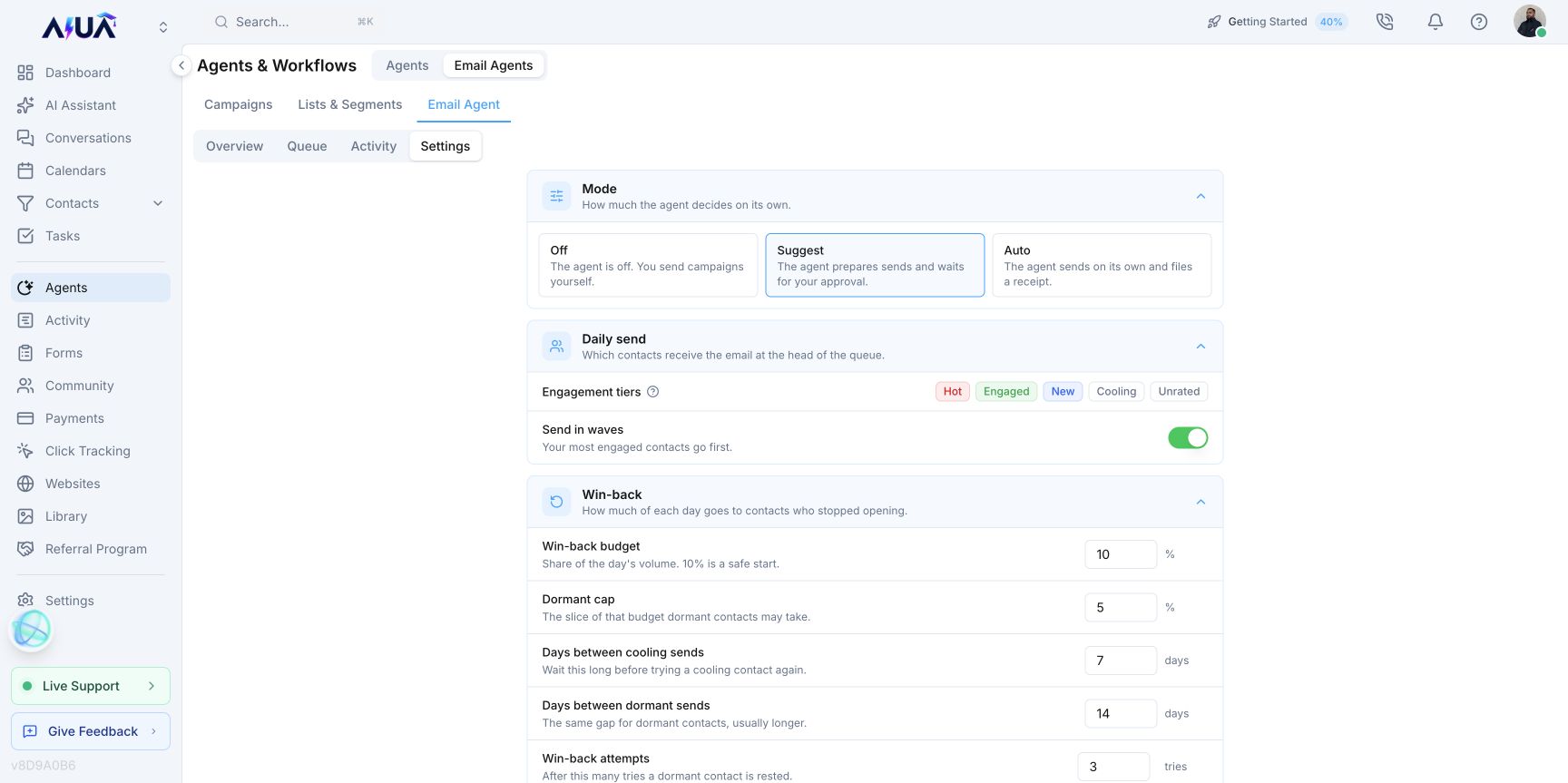
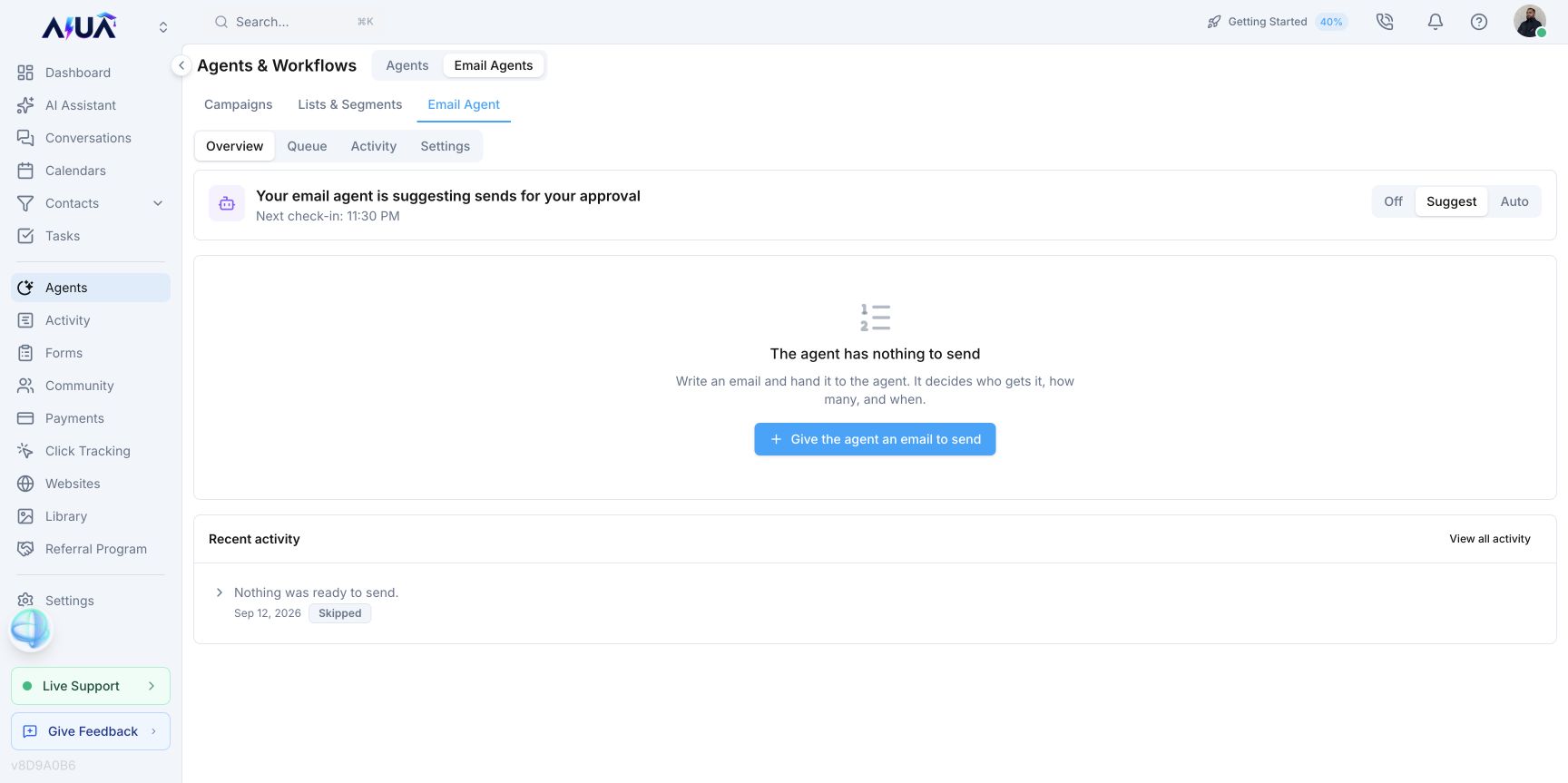
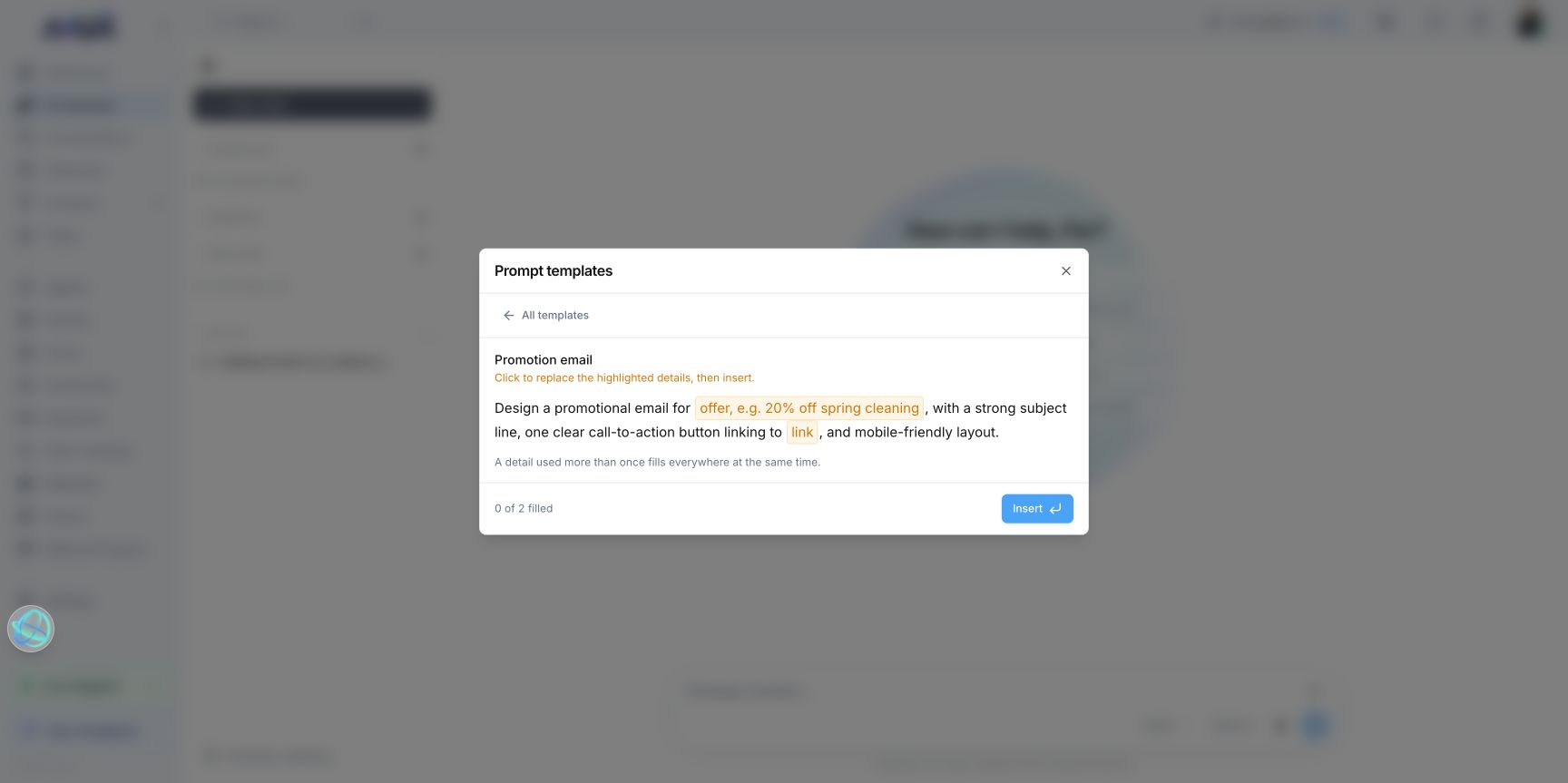
Settings, approval mode, and plain-language setupCaptured September 2026
Audit logs you can actually use.
Votel’s Activity hub turns operational history into something an agency can search, filter, export, and act on. It is a good example of clarity being treated as part of the product.
- Twelve log types were visible in our September 2026 review.
- Human-readable activity, filters, grouping, export, and IP visibility make troubleshooting faster.
- Deleted-contact restoration is the kind of practical detail operators appreciate.
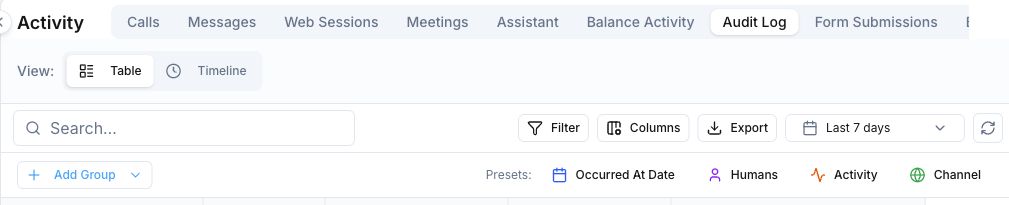
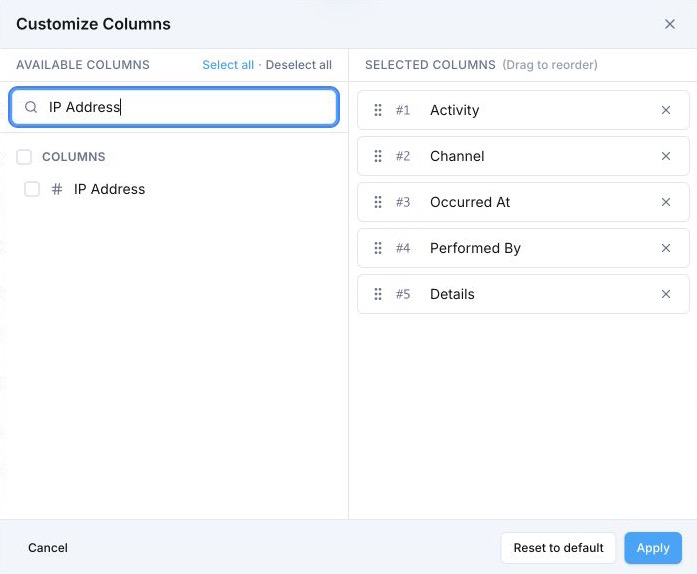
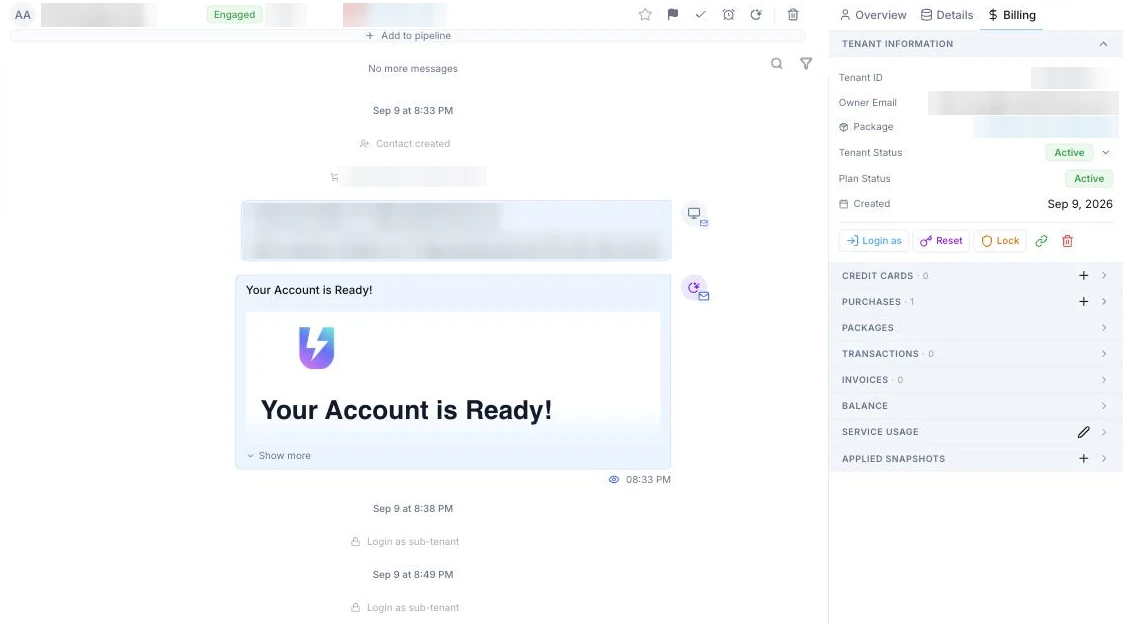
Activity overview and detailCaptured September 2026
A website visit can become an actionable record.
Visitor identification becomes valuable when it is connected to the CRM and follow-up system, not sitting in a separate dashboard.
- Identify a returning or known visitor when the available data permits it.
- Connect the visit to a contact record and the pages that matter.
- Trigger a relevant follow-up while keeping privacy and consent requirements in view.
Example contact
Illustrative workflow with fictional dataActual identification depends on available data and consent
The meeting stays inside the client system.
Built-in video is more interesting when it connects the booking, conversation, transcript, summary, and next action.
- The customer does not have to jump across a patchwork of meeting tools.
- Conversation context can stay with the contact and opportunity.
- Summaries and action items can feed the next workflow.
Illustrative meeting workflowParticipant names are fictional
What Votel still has to prove.
A promising product experience is not the same as years of proof. Votel is earlier in its journey, and it still has to show that it can preserve this simplicity as more customers, use cases, and features are added.
- Reliability, support, and performance must hold up as agencies place more client operations on the platform.
- Its documentation, education, implementation partners, and third-party ecosystem need time to mature.
- The team must keep the product coherent while executing an ambitious roadmap and responding to customer requests.
- Agencies considering a move need dependable migration paths and clarity about which established workflows can be carried over today.
HighLevel can integrate with almost anyone through its mature marketplace and ecosystem. If your business already depends on those connections, established workflows, or years of team knowledge, HighLevel may remain the better choice.
Where I see the edge for that specific starting point.
HighLevel remains the category pioneer, with a mature ecosystem, a remarkable community, and years of agency investment behind it. My recommendation changes only when the question is what I would choose for a brand-new AI-first build in 2026. I am not arguing that Votel is universally better than HighLevel. HighLevel is more mature, more proven at scale, and supported by a much larger ecosystem. Votel is earlier, which means choosing it also means accepting maturity, adoption, and product-change risk.
HighLevel earned its place. Votel is what I would choose next.
HighLevel pioneered this category, built an outstanding community, and made my own career possible. For a new agency or business owner starting in 2026, I prefer Votel’s mobile-friendly, AI-first experience. I say that with gratitude after spending almost seven years building on and around HighLevel.
“If your engine is already on HighLevel and it works for you, fantastic. Keep building. But if you are struggling to get your SaaS off the ground, or you are starting a new agency today, I highly recommend looking at Votel first.”
Do not disrupt a healthy business just to chase something new.
That is where I believe Votel deserves your first serious look.
Ready to explore the next step? See the bonuses, perks, coaching, and guides included with our affiliate link.