Why use it
Use it when you need a reliable detail, such as a name, email address, job address, or preferred appointment time.
Working example
Working example: capture booking details. Tested in the Votel chat simulator with dummy data on September 17, 2026. Static Response asked name, email, and phone in order. The block saved contact fields and activity-log answers; a short phone number was rejected before a valid number allowed the workflow to End.
Conversation Node → “Book service” → Ask & Save → End
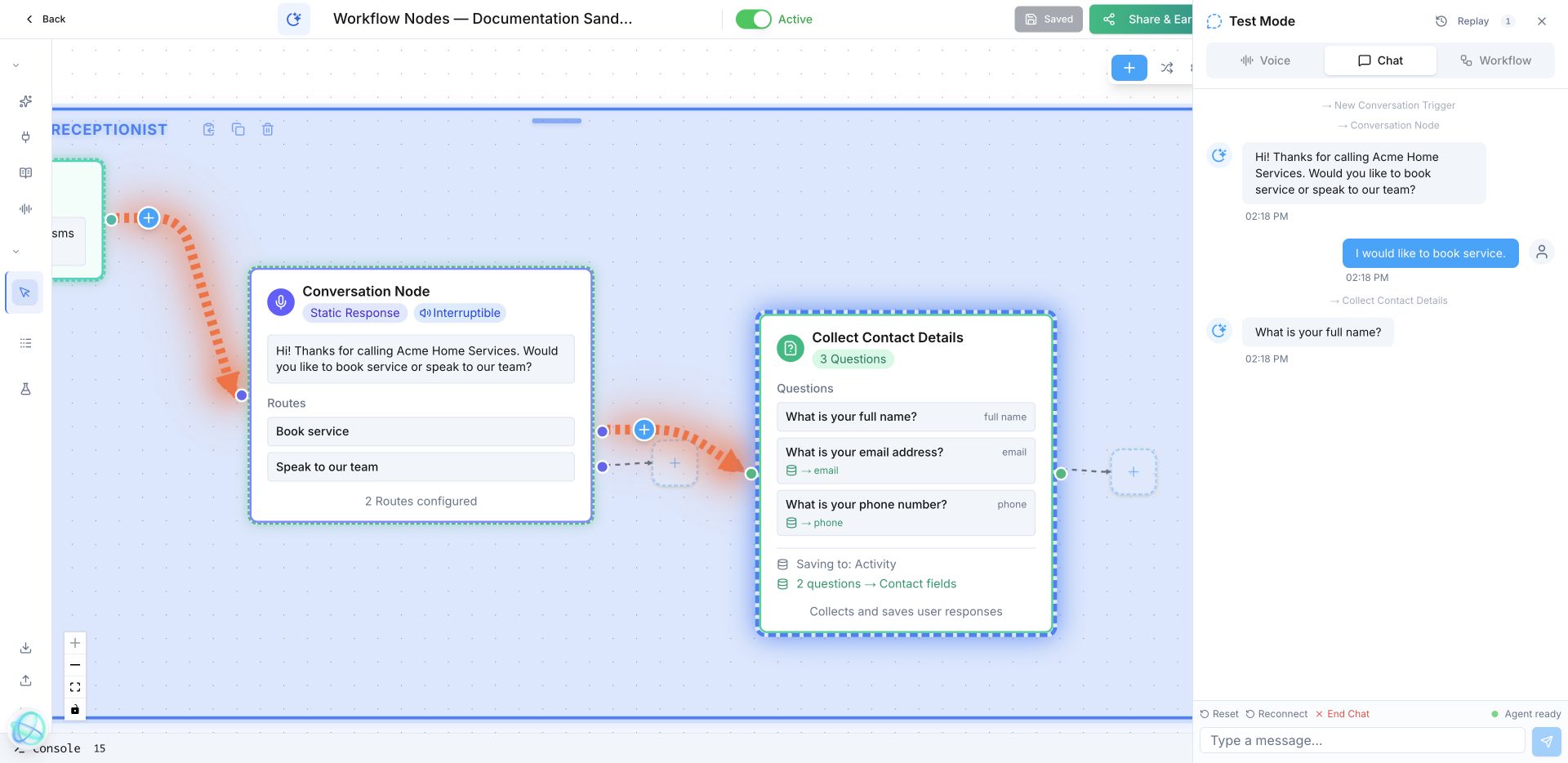
What is your full name? Then ask: What is your email address? Finally: What is your phone number?
Picture this
An HVAC agent asks, “What is the service address?” then saves the answer before checking the right technician’s availability.
Set it up
- Put Ask & Save immediately after the question it supports.
- Ask for one thing at a time in everyday language.
- Choose the contact field or workflow variable that should receive the answer.
- Decide what happens if the caller does not answer or gives an unusable answer.
What comes next
After this block, use the saved field or variable, then a Decision, booking step, or CRM update.
Avoid this when…
Use Extract Dynamic Variables when details arrive naturally across several sentences and may change mid-conversation.
Before you publish or activate: verify the current builder labels in Votel and test with dummy data. This independent guide describes the purpose and a safe setup approach; it does not replace Votel’s current product documentation or compliance advice.